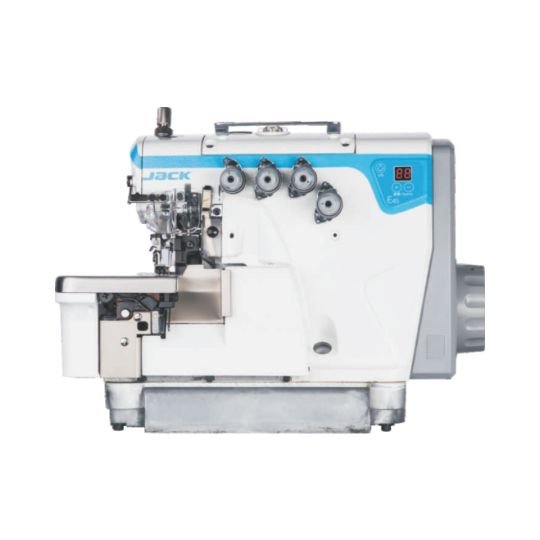
Overlock machines finish raw edges and join seams at the same time. The number of threads changes what the seam can do.
4-thread overlock
Two needles and two loopers form a strong, stretchable seam. It is the everyday choice for T-shirts, knitwear, hosiery and light-to-medium woven fabrics. It uses less thread and is slightly quicker to set up.
5-thread overlock (safety stitch)
A 5-thread machine adds a chain stitch next to the overlock. That extra row of stitching is the "safety" seam: if the overlock edge frays, the chain stitch still holds. It is the standard for jeans, trousers, shirts and workwear where seams take stress.
Which one for your shop?
- Tailoring shop / boutique: a 4-thread machine covers most jobs.
- Garment factory making wovens: 5-thread for seaming, 4-thread for finishing.
- Knitwear unit: 4-thread, and consider a flatlock for hems.
Direct-drive models save up to 70% electricity compared with clutch motors and run quieter, which matters when the machine runs all day.
Still unsure? Send us a photo of the garments you make and we will recommend the right model.